
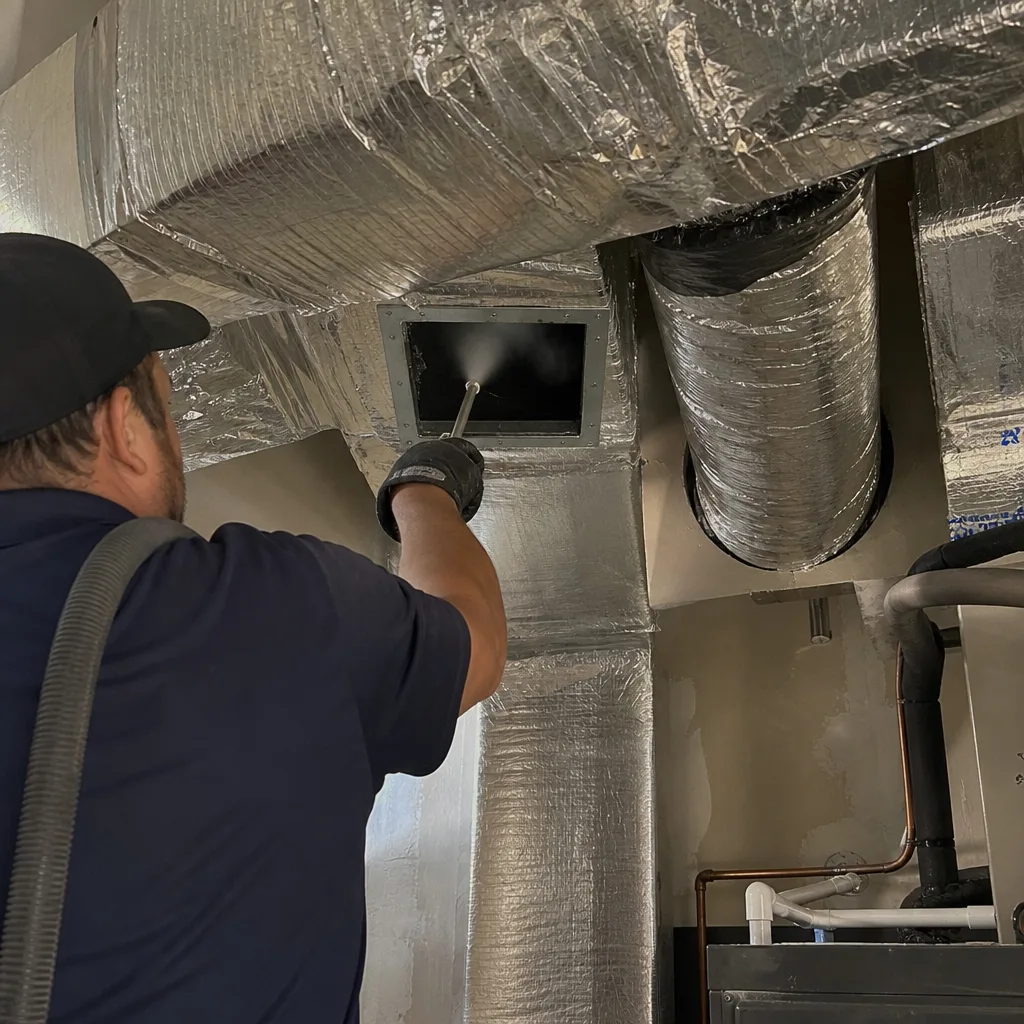
Last updated November 25, 2026
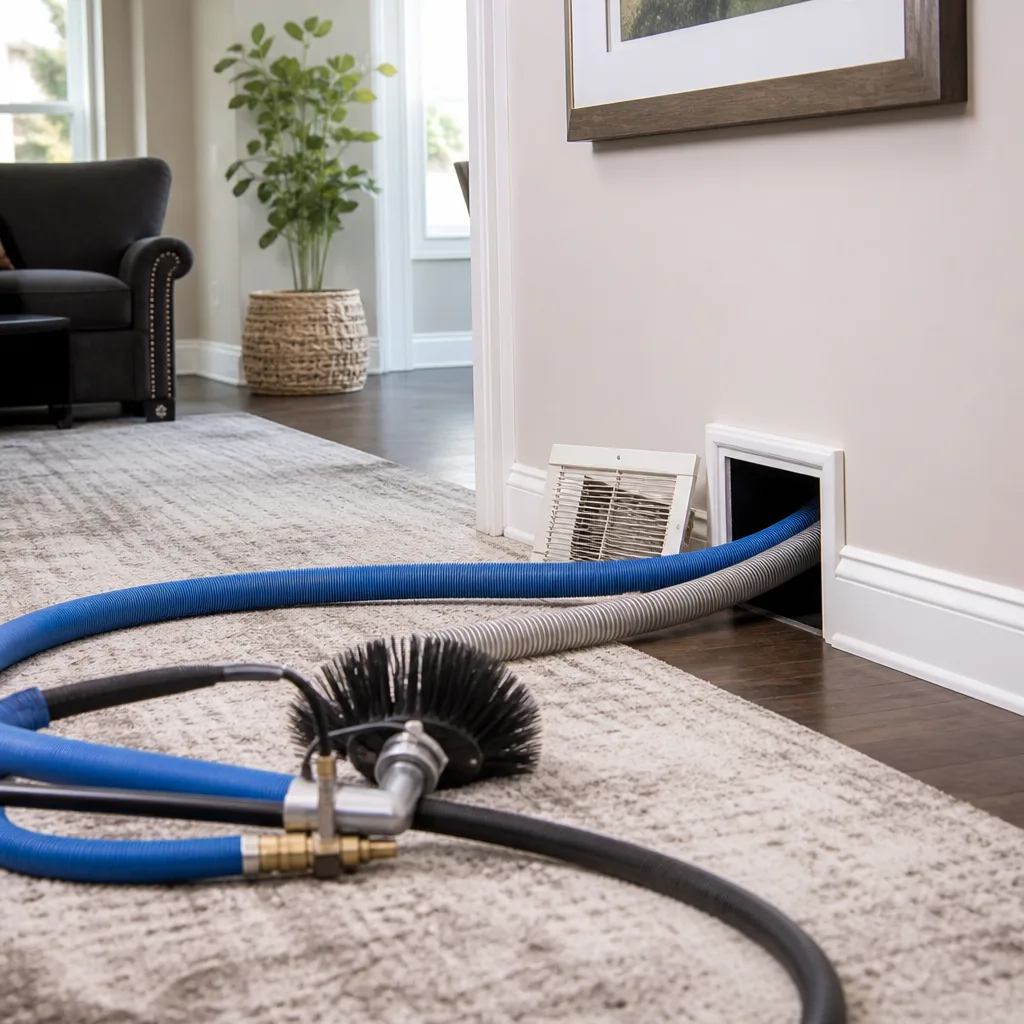 Whole-home duct cleaning
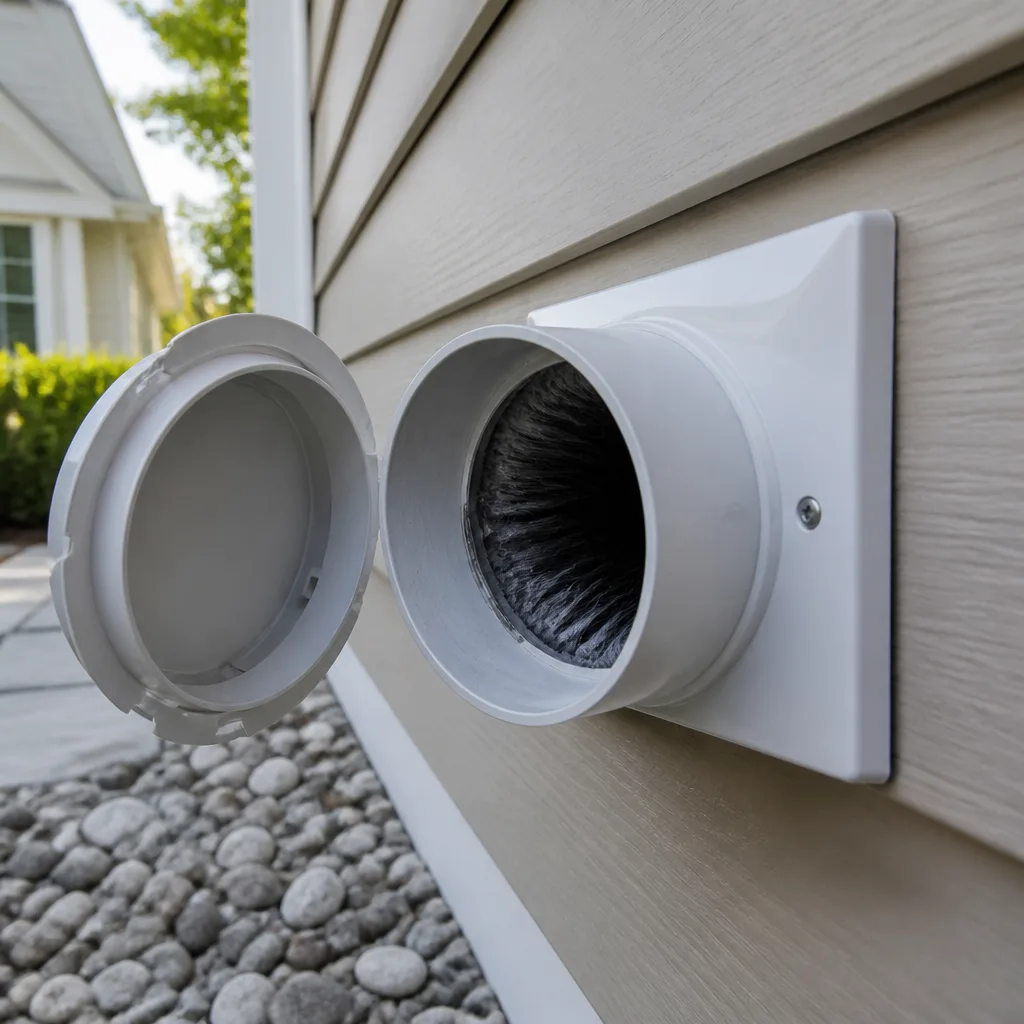 Dryer vent cleaning
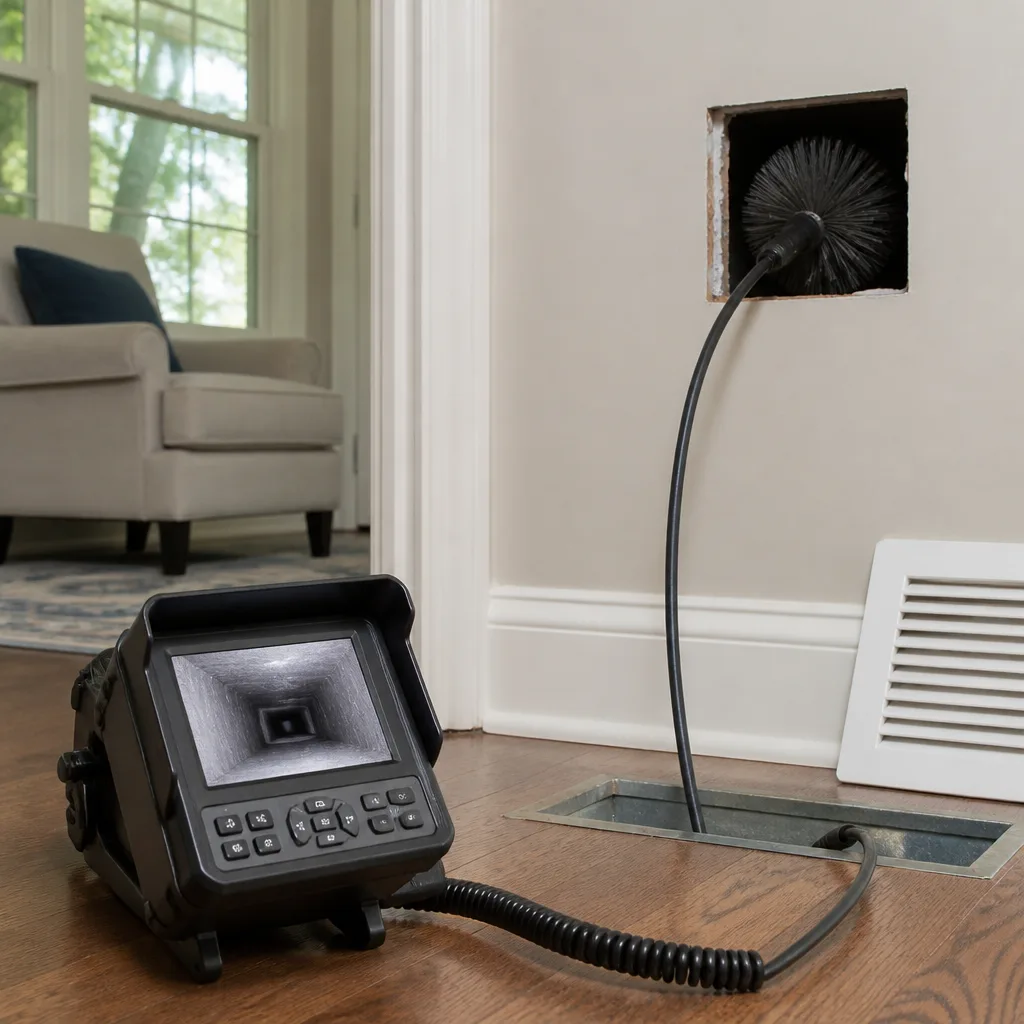 Camera inspection
 Sanitizing & deodorizing
Whole-system duct and dryer vent check with before-and-after photos - you see exactly what came out of your vents
That "$99 whole-house special" is a bait ad - the real number appears once they are in your hallway, or the "clean" is a shop-vac at the register. We photograph the inside of your ducts before and after instead.
The Complete Guide to Air Duct Cleaning in The Heights
Most duct cleaning visits take 45 minutes. A properly scoped full-system cleaning of an average Heights home takes 3 to 4 hours, and the difference shows up in what comes out of the system, not in what the technician tells you at the door. The reason comes down to how homes here are built: pier-and-beam foundations, attic-mounted air handlers, flex duct run through some of the hottest attic space in the country, and year-round humidity that never gives the duct interior a chance to fully dry. In this guide we walk through what a real cleaning involves, piece of equipment by piece of equipment, so you can tell the difference between source removal and a vacuum pass before you pay for either.
Quick Answer
Air duct cleaning in The Heights means removing accumulated dust, debris, and biological growth from the entire duct system using professional-grade equipment – negative-air containment, rotary agitation, and HEPA filtration – not just vacuuming at the registers. A thorough job on an average Heights home takes 3 to 4 hours, covers supply and return runs plus the air handler, and should end with a documented inspection. Because this area’s housing stock was built before modern duct sealing standards and its humidity stays elevated most of the year, source-removal cleaning followed by repair and sealing is the standard a Heights homeowner should expect.
Styles & brands we work with
- Whole-home duct cleaning
- Dryer vent cleaning
- Camera inspection
- Sanitizing & deodorizing
Table of Contents
- Why The Heights Duct Systems Collect Debris Differently
- The Equipment That Does the Actual Work
- Source Removal vs. Blow-and-Go Cleaning
- Houston Humidity, Flex Duct, and Mold Colonization
- What a Full-System Cleaning Covers
- What Post-Cleaning Inspection and Documentation Should Include
- What Duct Cleaning Costs in The Heights
- Common Mistakes to Avoid
Why The Heights Duct Systems Collect Debris Differently
Walk through the residential blocks of The Heights and you’ll notice two housing patterns living side by side. The older Craftsman-era homes, many on pier-and-beam foundations, have a crawl space below the floor and HVAC equipment that was retrofitted into attics or closets. Newer builds on slab foundations run ductwork through attic space or under the slab itself. Each arrangement collects debris in its own way, and the differences matter when it’s time to clean.
In a pier-and-beam home, the return-air plenum and the boots that drop into floor registers are where debris concentrates first. Floor-level intakes pull in dust, pet hair, and whatever settles on a wood floor, and a bit of that migrates past the grille every time the blower kicks on. Because the return chase often runs through unconditioned crawl space, small foundation-level gaps can also draw in soil dust. In slab homes the return is usually overhead or in a wall cavity, so the debris load shifts toward the supply runs and the air handler cabinet.
Attic-mounted air handlers add another wrinkle. The attic in a Heights home is not a conditioned space. It gets hot, it stays humid, and the cabinet housing the coil and blower sits in the middle of it. Dust that would otherwise dry out and blow through tends to cling to a damp coil and the plenum surfaces around it. That’s why a cleaning that skips the air handler and only touches the supply ducts leaves most of the problem in place.
The takeaway: debris in The Heights doesn’t accumulate evenly. It pools where the house is coolest and dampest, and any professional assessment should map where those spots are before a tool gets turned on.
The Equipment That Does the Actual Work
Duct cleaning isn’t one tool. It’s a coordinated system, and each piece has a job. Knowing what each one does tells you whether you’re watching a professional cleaning or a sales pitch with a hose attached.
Negative-Air Machine
A large HEPA-filtered vacuum unit connects to the main trunk, typically at the air handler or a seam, and pulls the entire duct system into negative pressure. This is the foundation of containment. Without it, every brush stroke just lifts dust into the air you’re breathing. Professional technicians set negative-air machines up before any agitation begins and verify the seal around the connection point.
Rotary Brush and Air Whip
A rotary brush, mounted on a flexible shaft, travels down each run and physically loosens the caked-on dust film that clings to duct walls. An air whip uses compressed air to agitate the surfaces in flexible ducting where a rigid brush could tear the liner. Both tools push debris toward the negative-air collection point. The Rotobrush and Nikro systems are built for exactly this – professional-grade duct agitation, not a converted shop vac with a hose extension.
Video Inspection Camera
A small camera on a flexible reel goes into the ductwork before, during, and after cleaning. Before, it confirms what the debris load actually is and whether there’s mold growth, a collapsed liner, or a disconnected run. After, it shows the interior is clean. A technician who never shows you a screen is asking you to take their word for it. Ask to see the feed.
Air-Containment Equipment
On jobs where the return or supply cabinet needs opening, air-containment barriers keep dust from spilling into the room. Abatement Technologies equipment sets that professional remediation work can also use. On a Heights job, that’s the difference between a cleaning and a mess.
Source Removal vs. Blow-and-Go Cleaning
Source-removal cleaning is the industry standard under the method recognized by NADCA, the National Air Duct Cleaners Association. It means contacting and removing the contamination at the surface where it lives – the duct wall, the plenum, the coil face, the boots – and pulling it out of the system under containment. Blow-and-go cleaning is a different thing altogether. It uses air pressure to push debris out of the vents while a vacuum runs nearby, then calls the job done.
Why does it matter? Blow-and-go leaves the settled film on the duct interior largely intact and sends a cloud of dislodged dust through the house in the process. It looks impressive in the moment because dust comes out of the registers. It doesn’t change what’s still inside.
How to Tell Which One Was Performed
- Ask before the job what the technician will do inside each run – source removal should involve physical agitation (brush or whip) in every run, not just a vacuum at the register.
- Watch whether a negative-air machine is set up and running before any work starts inside the ductwork.
- Ask to see the video inspection at the end. A source-removal job shows clean metal or clean flex liner. A blow-and-go job shows streaks and residue.
- Look at the boots and floor registers. A thorough cleaning removes the debris collected there, not just the debris that happened to be in the main trunk.
- Ask for a written inspection report or photos. Legitimate work produces documentation without you having to demand it.
In our experience in The Heights, source-removal cleaning typically takes 3 to 4 hours on a standard three-bedroom home with an attic air handler. If a company offers to finish in 45 minutes, they are not doing this.
Houston Humidity, Flex Duct, and Mold Colonization
Houston sits in a warm, humid climate year-round, and the effect on ductwork is real. Flex duct, which is the common choice for attic runs, has an inner liner with corrugations and folds that trap moisture in a way smooth sheet metal does not. When the system cycles off, condensation can form inside the liner during the warm months, and that damp environment gives mold the conditions it needs to colonize.
Sheet metal duct handles humidity better because it’s smooth and drains. But it also has seams and joints where organic dust collects, and those spots are where growth starts. Sealed ducts lose that advantage.
This is why sanitizing decisions in The Heights can’t be a blanket upsell. Two things decide whether a duct system needs sanitizing:
- Visual evidence of growth. Confirmed on the inspection camera, not assumed from a smell alone.
- Moisture source. If there’s standing moisture or an unresolved leak into the duct system, sanitizing without fixing the source is pointless. The growth returns.
The proper sequence is: identify the moisture source, repair the duct or insulation that’s creating it, clean the surfaces, and then sanitize if the inspection supports it. Whole-home air-quality products – the kind made by Aprilaire and Honeywell – work as a complement to that sequence, not a substitute for it. A UV system or high-efficiency filter installed on a system full of debris is a waste of a good upgrade.
What a Full-System Cleaning Covers
“Air duct cleaning” is often used loosely. A full-system cleaning means every component that air passes through, and it should include:
- Supply ducts from every register back to the trunk. Agitated and vacuumed under negative-air containment.
- Return-air ducts and grilles. Often the dirtiest part of the system and the part most frequently skipped.
- The air handler cabinet. Debris collects at the blower and coil face, and a cleaning that bypasses the cabinet leaves that material in place.
- The evaporator coil surface. A dirty coil cuts efficiency and holds moisture. Cleaned with the right tools, not a garden hose.
- Register boots and grilles. Removed, cleaned, and reinstalled.
- Inspection and documentation. Before-and-after photos or a video record of each run.
The dryer vent is a separate but related system. It’s one of the fastest-clogging vents in a house, and when lint packs up, it becomes a fire risk and a longer-drying laundry. Air Duct Cleaning The Heights handles it as a standalone service, and it pairs naturally with a duct cleaning when you’re going to have technicians at the house anyway. The other four services – HVAC cleaning (including the coil and blower), air-quality sanitizing, and duct repair and sealing – all sit alongside a standard cleaning.
Sealing deserves a note of its own. If the inspection shows disconnected boots, torn flex, or joints that were taped decades ago and have since failed, cleaning only gets you the current contamination out. Sealed ductwork stays clean longer and stops losing cooled air into the attic, which is the biggest energy drag in a Heights home. We clean it, then we seal it, because cleaning a leaky system is like cleaning a room with the windows open.
What Post-Cleaning Inspection and Documentation Should Include
A legitimate cleaning ends with evidence. Without it, you have no way to confirm what happened inside the ductwork. Here’s what to ask for:
- Video or photo record of each major run. Before and after. A hand-held camera down one supply line doesn’t count – every run should show clean surfaces.
- Inspection of the air handler and coil. A photo of the cleaned coil face and blower wheel.
- Documentation of any problems found. If the camera showed a collapsed flex liner, a disconnected boot, or visible mold, that should be written down and photographed, with a recommendation for repair.
- A written summary of what was cleaned and what was not. Legitimate reports include both. If a run was inaccessible, the report should say so.
- Notes on moisture or insulation issues. A wet patch on flex insulation needs a fix before another cleaning will do anything.
Guardsman-grade surface protection during the service matters here too. Asking whether floor coverings and furniture protection will be used is a fair question, and there’s no reason a working technician should ever hand-wave it.
What Duct Cleaning Costs in The Heights
Air duct cleaning pricing in The Heights varies by home size, number of runs, and whether repair or sealing is needed. A typical whole-system cleaning on a 1,500 to 2,500 square foot home generally lands in the $400 to $800 range, with larger homes or homes needing major repair work running higher. Standard register-to-register cleaning ranges roughly $300 to $500, while dryer vent cleaning typically runs $100 to $200 as a standalone service, and duct repair and sealing is quoted per job. These are estimates – the written estimate sets the final price.
The number to be suspicious of is any single, attractively round figure quoted over the phone before anyone has looked at your system. Duct cleaning is diagnostic work. A legitimate provider wants to see the system – ideally with a camera – before quoting, because a 1,600 square-foot bungalow in The Heights and a 2,800 square-foot two-story on a newer lot are different jobs entirely.
Common Mistakes to Avoid
- Accepting a coupon price that grows on the day. A low advertised price that becomes triple when the technician is on site is the classic bait-and-switch. Ask for a flat price per system agreed before any work begins.
- Skipping the air handler. A cleaning that touches only the supply runs leaves the coil and blower cabinet full of debris. In The Heights, with its humid attic air handlers, that’s where a lot of the problem lives.
- Sanitizing without fixing the moisture source. Fogging a duct system while a leaking boot or wet flex insulation stays in place produces a short-lived clean.
- Trusting a company that has no inspection camera. If they can’t show you what the duct internals look like before and after, you have no verification the work happened.
- Cleaning without addressing leaks. Ducts with disconnected boots or failed seams will fill up again quickly. Repair and sealing should be part of the conversation.
- Booking a dryer vent cleaning “later.” Dryer vent lint is a fire risk and builds up quietly. If it’s been years since it was cleaned, it’s overdue.
- Assuming an air purifier will do the work instead of cleaning. A Honeywell or Aprilaire unit installed over a dirty duct system is working against the debris, not on top of a clean system. Clean first, then upgrade.
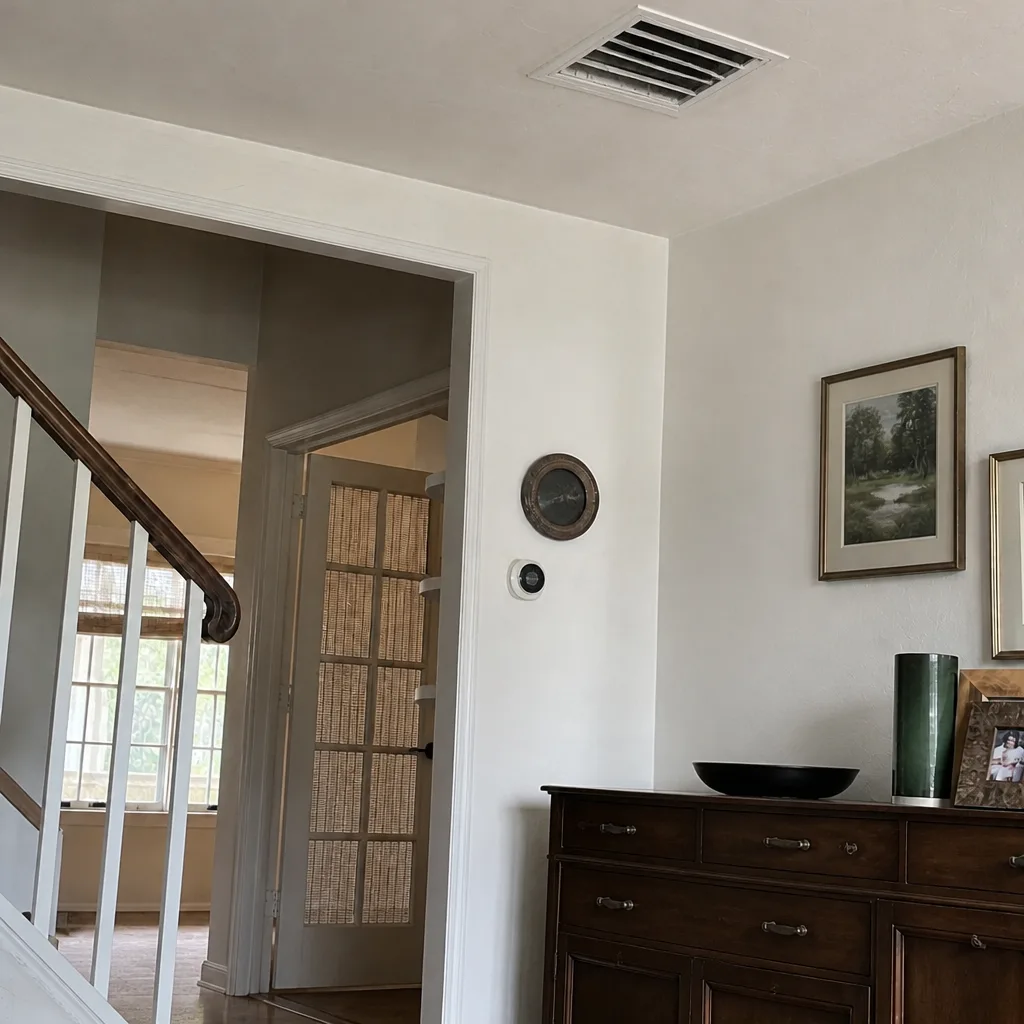
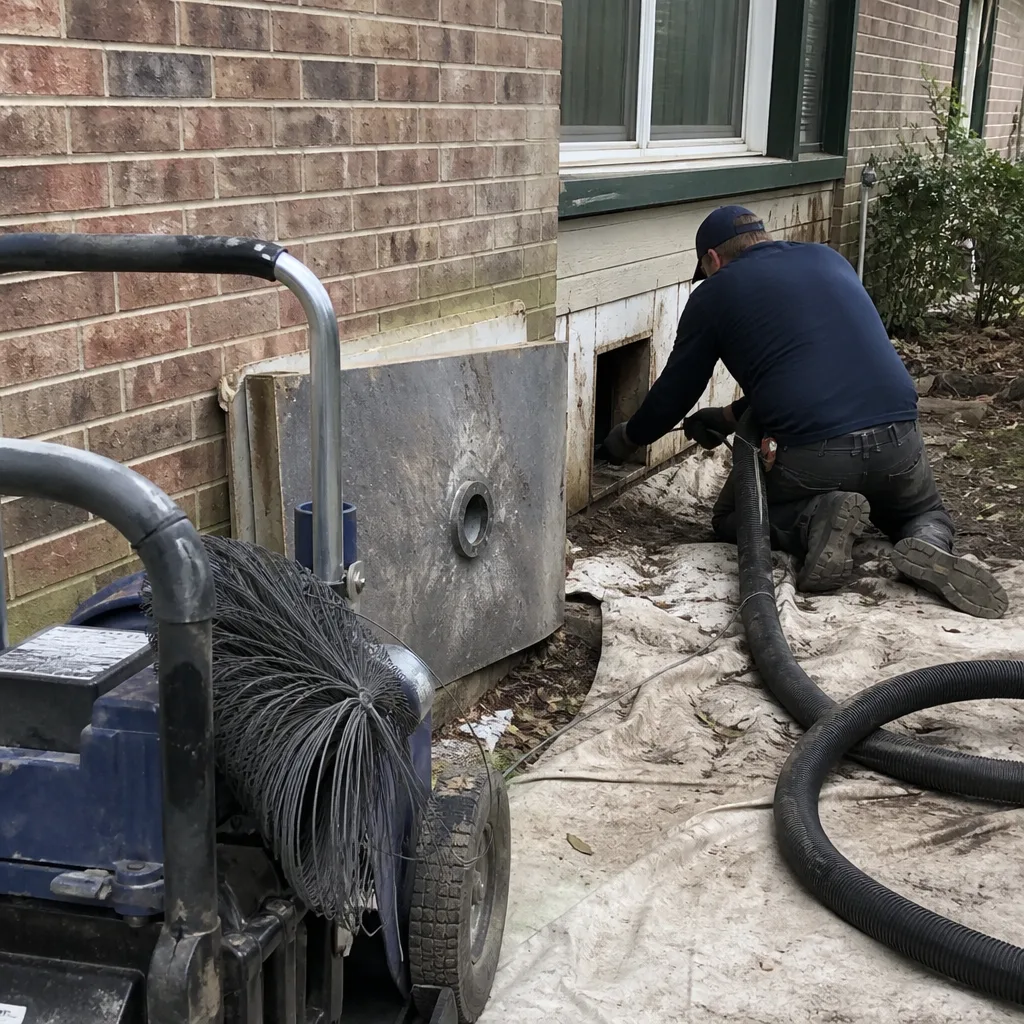
See the difference
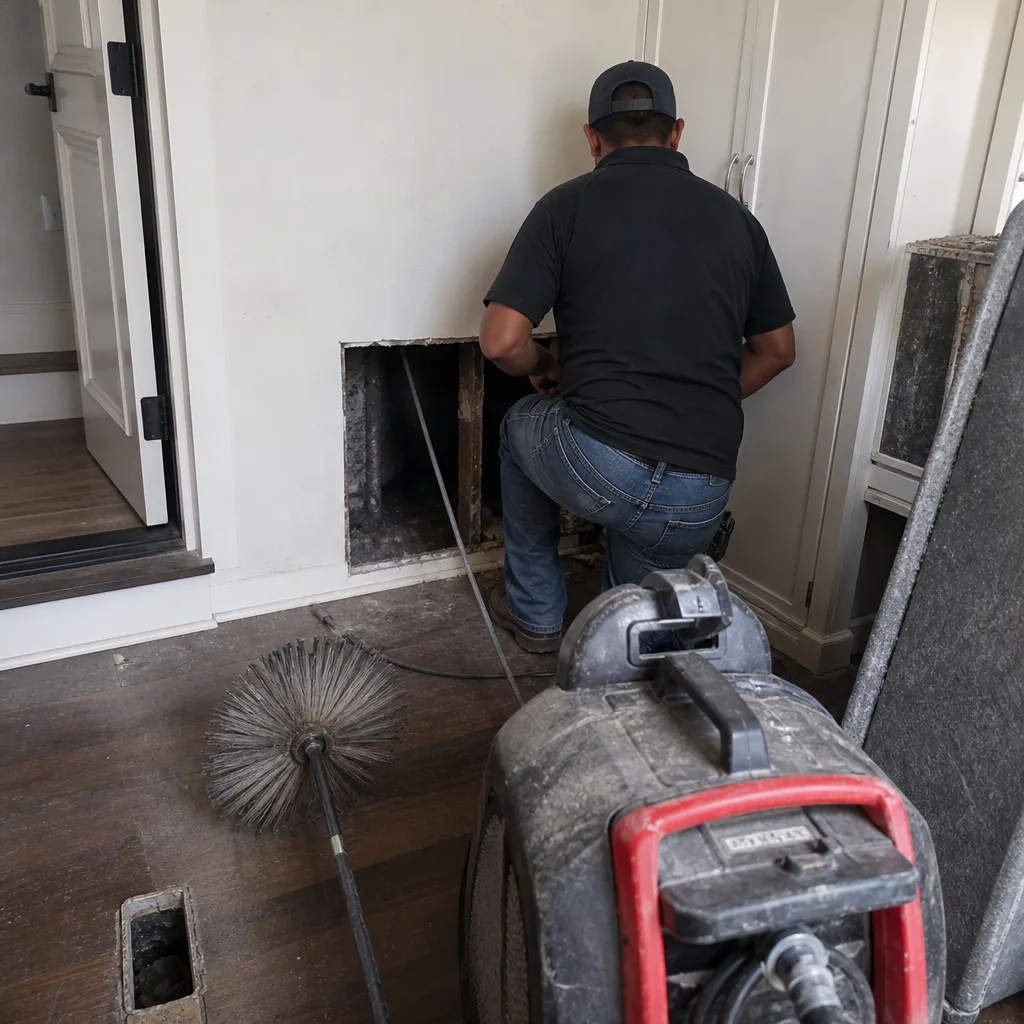 Before
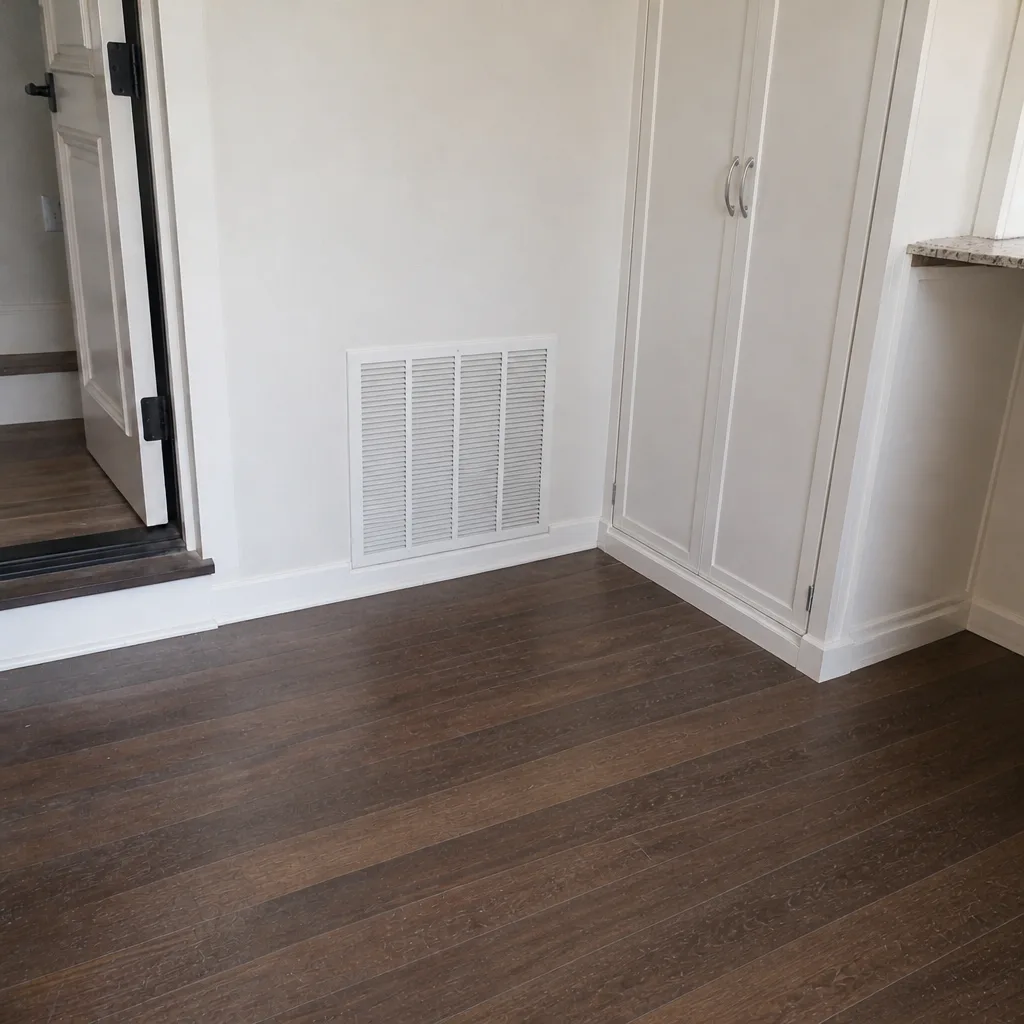 After
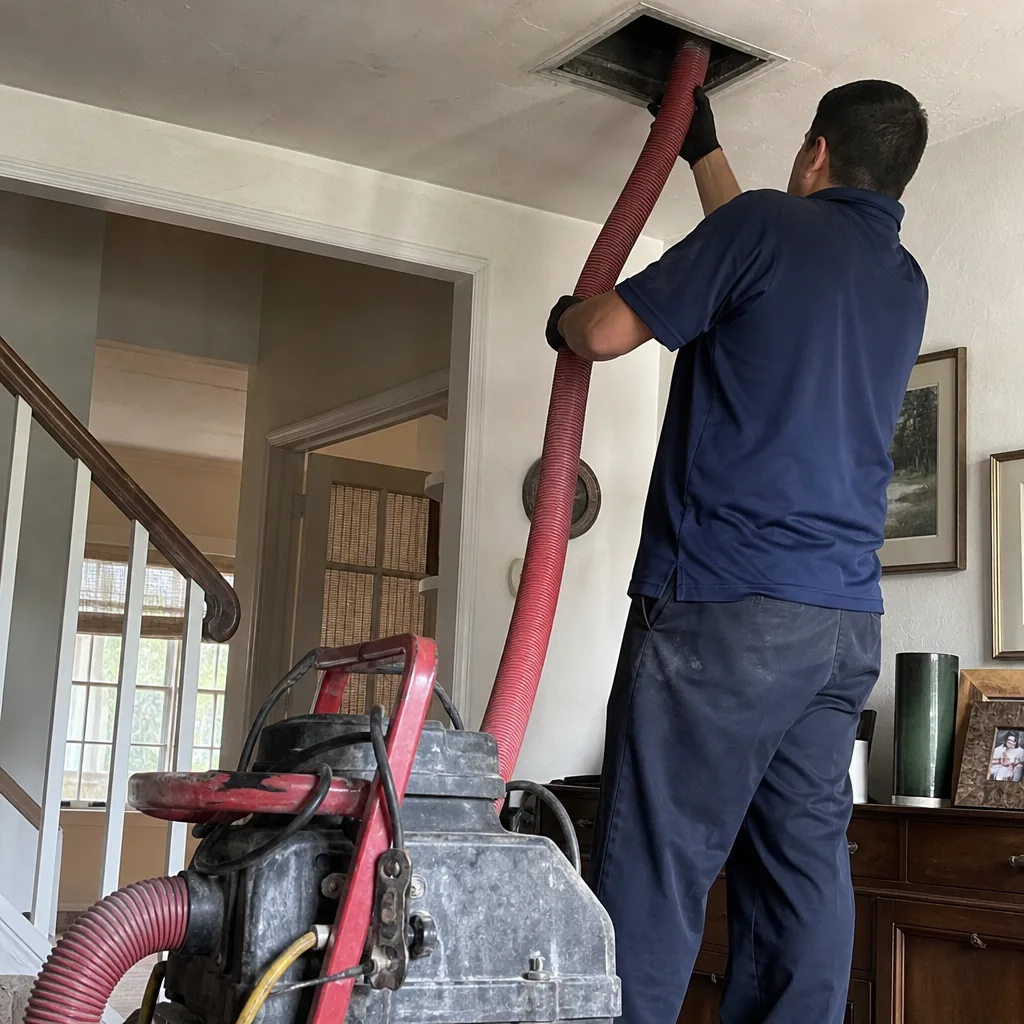 Before
 After
 Before
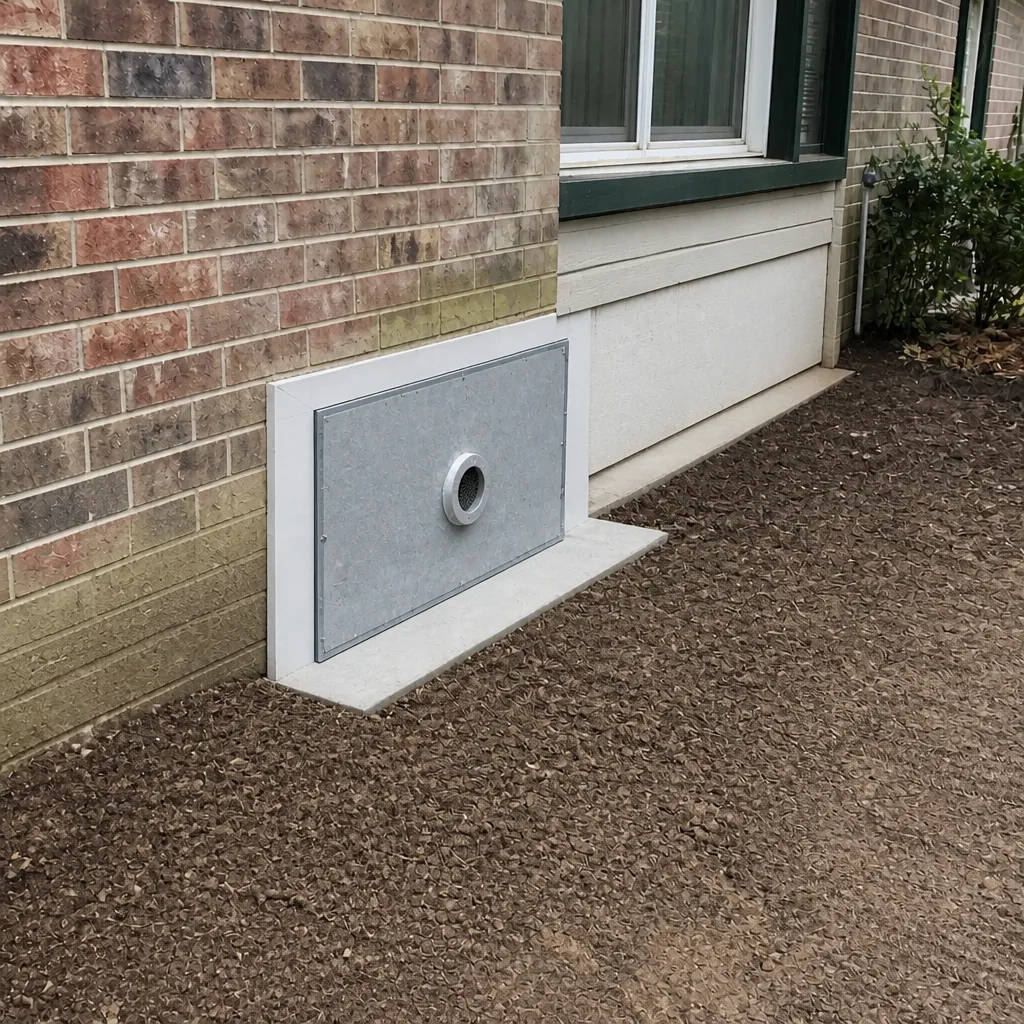 After
When to Call a Professional
If you’ve noticed musty odors coming from the supply registers, visible dust settling on surfaces within a day of cleaning, allergy symptoms that seem to follow you from room to room, or rising energy bills with no other explanation, a proper inspection is warranted. If you’ve recently moved into an older home in The Heights and don’t know the duct history, that’s another reason to look. If your dryer takes two cycles to dry a load, the vent needs attention. If you’re a property manager with a tenant complaint about air quality, a documented cleaning and inspection is the right defensive move. Our technicians have up to 8 years of experience and can walk you through what’s actually in the system before you spend anything. Air Duct Cleaning The Heights offers free estimates in The Heights – call (855) 726-7524.
Frequently Asked Questions
Every 3 to 5 years for most homes, sooner if you’ve had construction or renovation dust, pets, or visible mold growth. Houston’s humidity makes a case for looking at the system every few years even if it doesn’t strictly need cleaning, because moisture problems start quietly. Call (855) 726-7524 for an exact quote – estimates are free.
Typical whole-system cleaning runs $400 to $800 depending on home size and number of runs, with repairs and sealing quoted separately. A written estimate sets the final price, so the phone number you get before a visit should always be treated as a range. Call (855) 726-7524 for an exact quote – estimates are free.
Because they’re not doing the same work. A $99 or $149 price typically covers a quick vacuum at the registers, not source-removal cleaning with negative-air containment. The cost of the real process – equipment, time, labor, containment, documentation – has a floor, and a price below that floor tells you what you’re being offered. Ask any company to describe their cleaning process step by step before you book.
You ask for before-and-after photos or video from inside the ducts, run by run. A source-removal cleaning with a video inspection camera produces that record as part of the job. If the company can’t produce it, you don’t have verification the cleaning happened. Call (855) 726-7524 and ask about inspection documentation on the estimate.
Yes. Elevated year-round humidity means moisture can linger in flex duct liners, and damp dust is where mold growth starts. That makes the source-removal cleaning standard and the repair-and-sealing step more consequential in The Heights than in a drier climate. Cleaning alone helps, but sealing out the moisture path is what keeps a system clean longer.
Often yes. Repair and sealing is one of five services we handle under one provider, and the inspection camera used during cleaning is the same tool that finds disconnected boots, torn flex, and failed joints. Cleaning followed by sealing is a natural pair because the fix stops the leak that let the debris in the first place. If you’re booking air duct cleaning in The Heights, ask what the repair scope looks like on the same call.
The Bottom Line
Air duct cleaning in The Heights is not a 45-minute service, not a coupon price, and not a single vacuum pass at the registers. It’s a 3 to 4 hour source-removal process, using professional-grade equipment – negative-air containment, Rotobrush or Nikro agitation, and video inspection – followed by whatever repair and sealing the system needs. The Heights’ older pier-and-beam homes, attic-mounted air handlers, and Houston’s sustained humidity all make the full-system approach the right one. If the price you’re quoted doesn’t cover the whole system, it isn’t the whole job. If the documentation doesn’t exist, the work may not have happened. The cleaner the system, the easier it is to diagnose and fix air-quality problems afterward, and that starts with doing this part right.
Call (855) 726-7524 for a free estimate. We answer 24/7. Fast dispatch from 7am to 7pm, Sunday through Friday. From cleaning to air quality systems, one call covers the whole system – Air Duct Cleaning The Heights handles air duct cleaning, dryer vent cleaning, HVAC cleaning, air-quality sanitizing, and duct repair and sealing with the same professional-grade equipment.
Written by the team at Air Duct Cleaning The Heights.