
Last updated November 25, 2026
 Whole-home duct cleaning
 Dryer vent cleaning
 Camera inspection
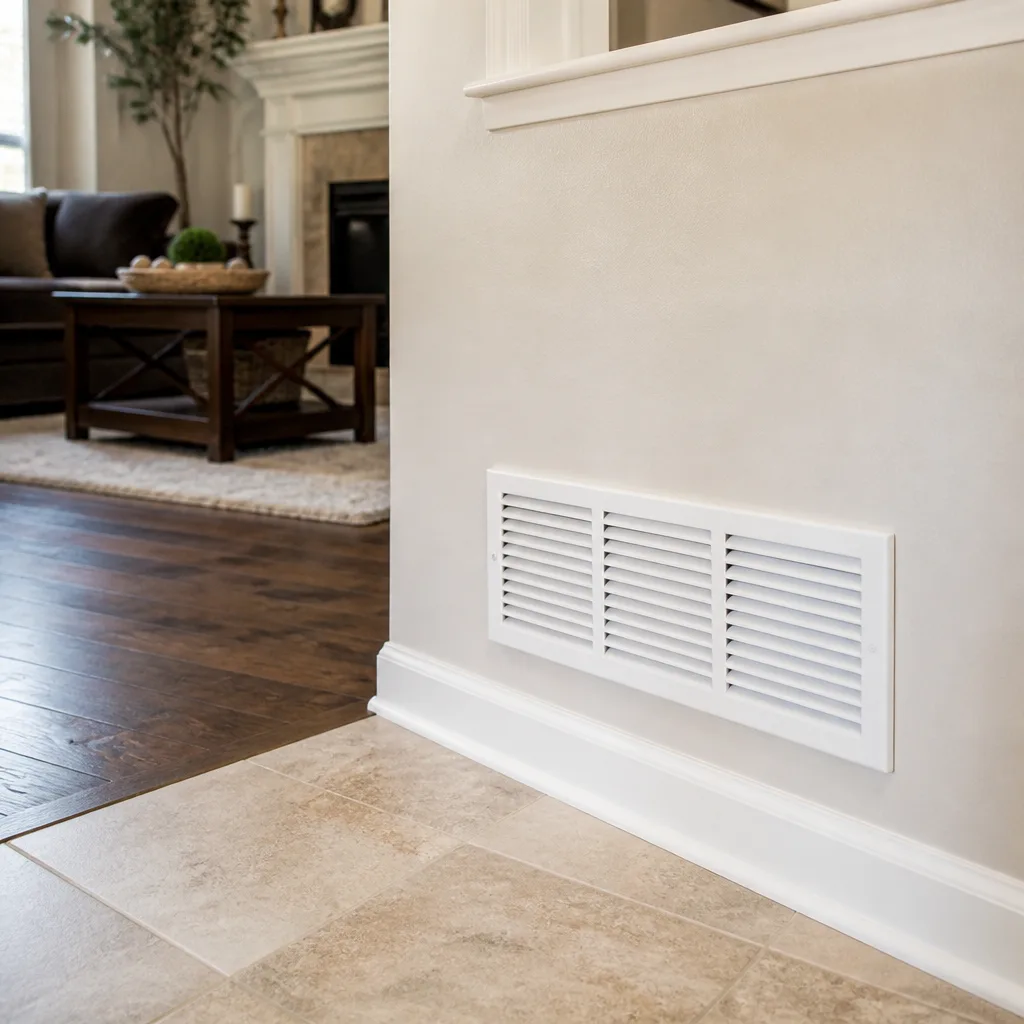 Sanitizing & deodorizing
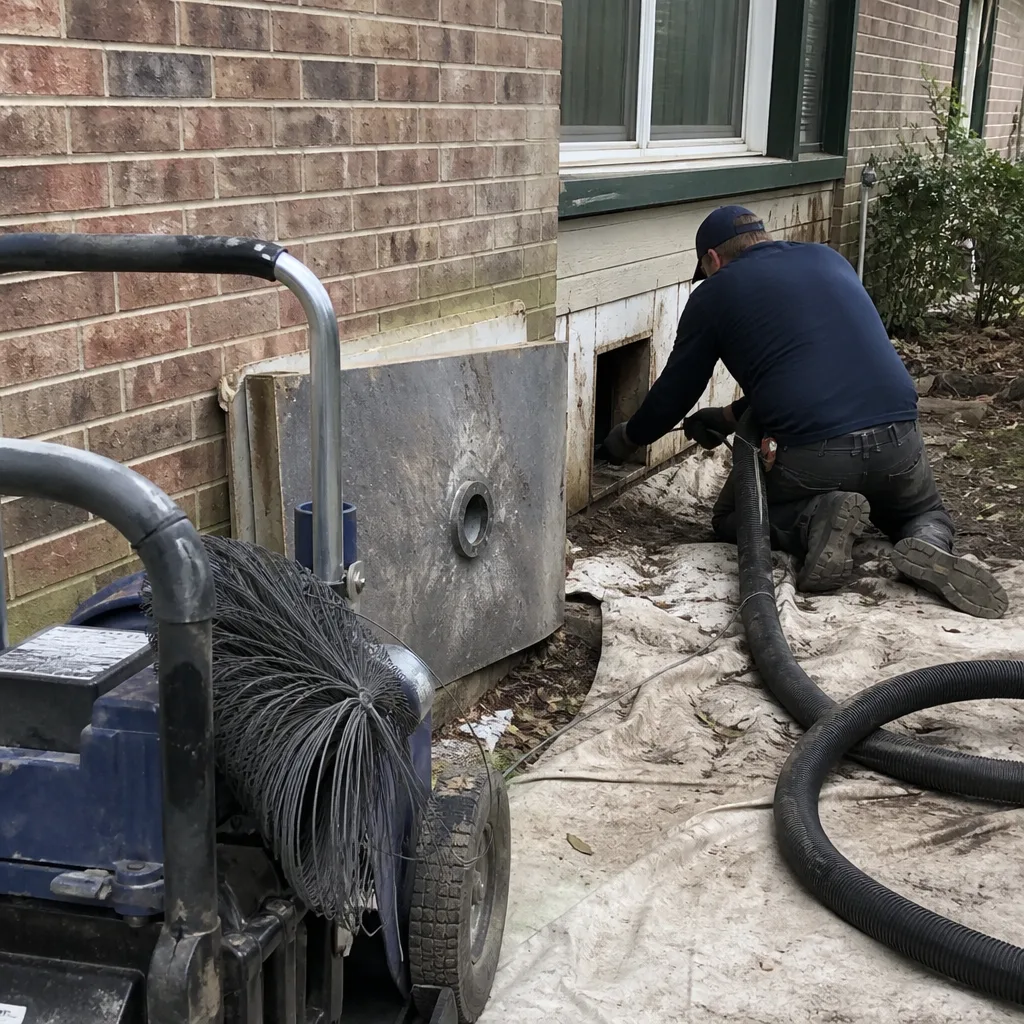
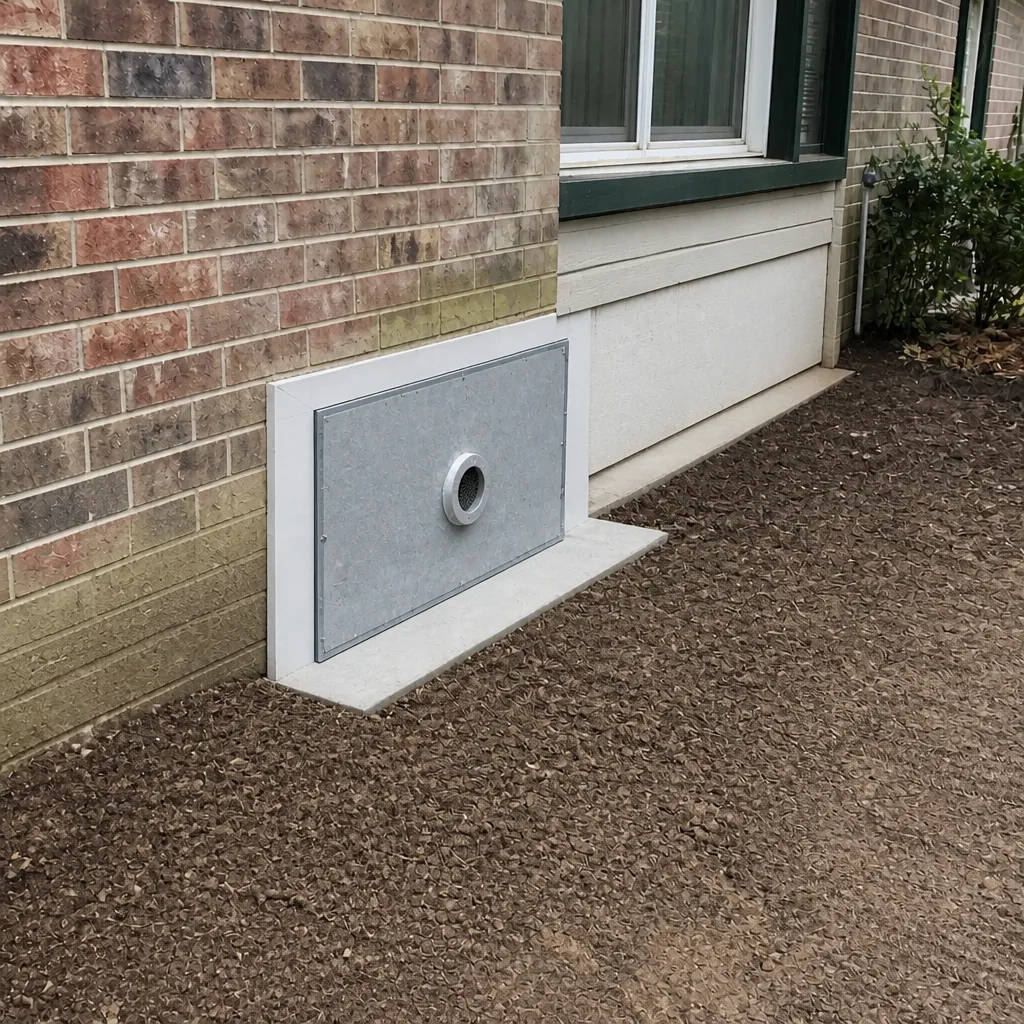
Whole-system duct and dryer vent check with before-and-after photos - you see exactly what came out of your vents
That "$99 whole-house special" is a bait ad - the real number appears once they are in your hallway, or the "clean" is a shop-vac at the register. We photograph the inside of your ducts before and after instead.
Air Duct Cleaning Cost Breakdown: The The Heights Homeowner’s Reference for 2026
A $149 whole-home duct cleaning quote and a $650 quote can both be entirely accurate. They’re just describing two completely different services that happen to share a name. One is a technician running a shop vac over your supply registers for forty minutes. The other is a crew running negative-air containment and rotary brush equipment through every branch line in the system, sealing access points when they’re done, and documenting the before and after. Same words on the invoice. Nothing else in common. This guide breaks down what actually drives the number on a duct cleaning quote in The Heights, what’s a legitimate add-on, and what’s upsell padding – so you can compare quotes on equal terms instead of comparing a teaser against a real price.
Quick Answer
Air duct cleaning for a typical single-system home in The Heights runs roughly $350 to $700 for a full mechanical cleaning of the supply and return system, while larger two-story Craftsman layouts with multiple systems or extensive attic ductwork commonly land between $700 and $1,200. Add-ons like a dryer vent cleaning, coil and blower cleaning, or duct sealing are priced per job by written estimate, not per vent. The written estimate you receive before any work starts is what sets the final price – never a low figure quoted over the phone and revised once the technician is in the attic.
Styles & brands we work with
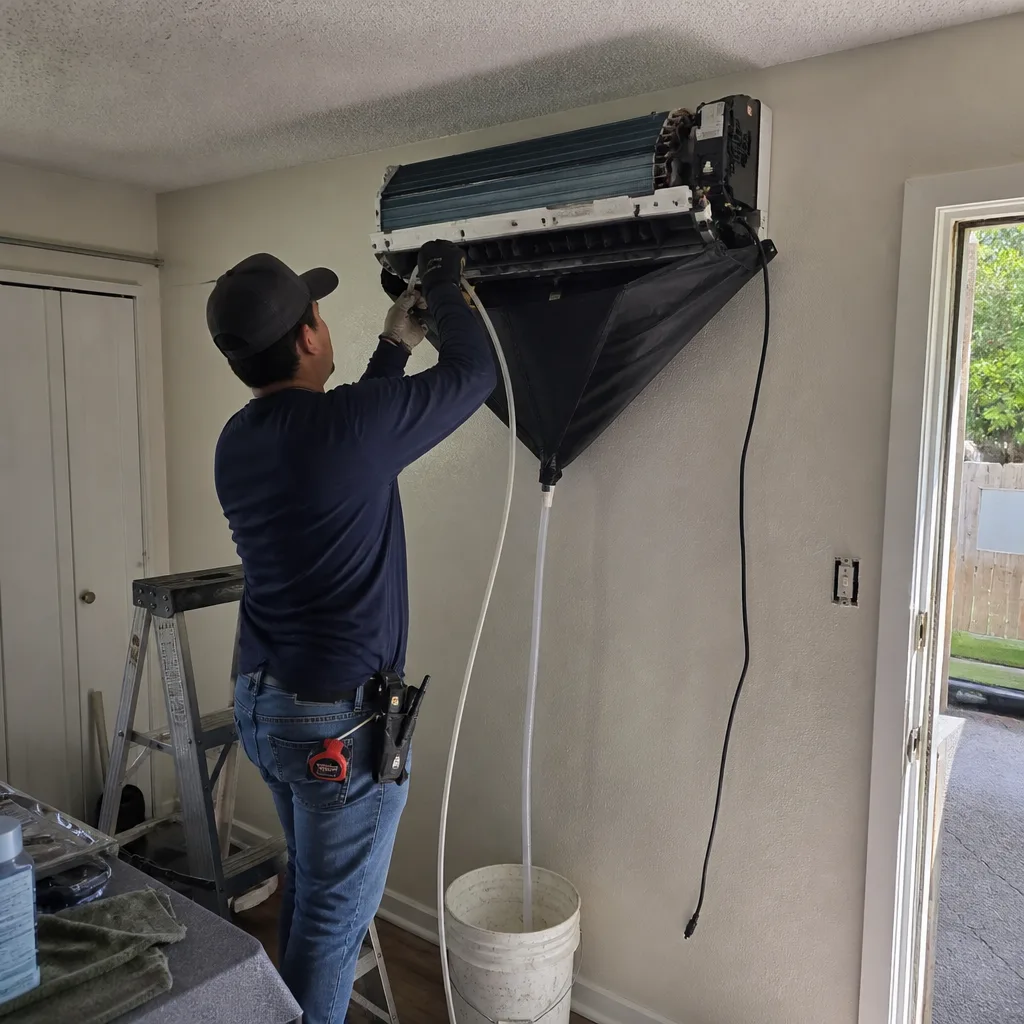
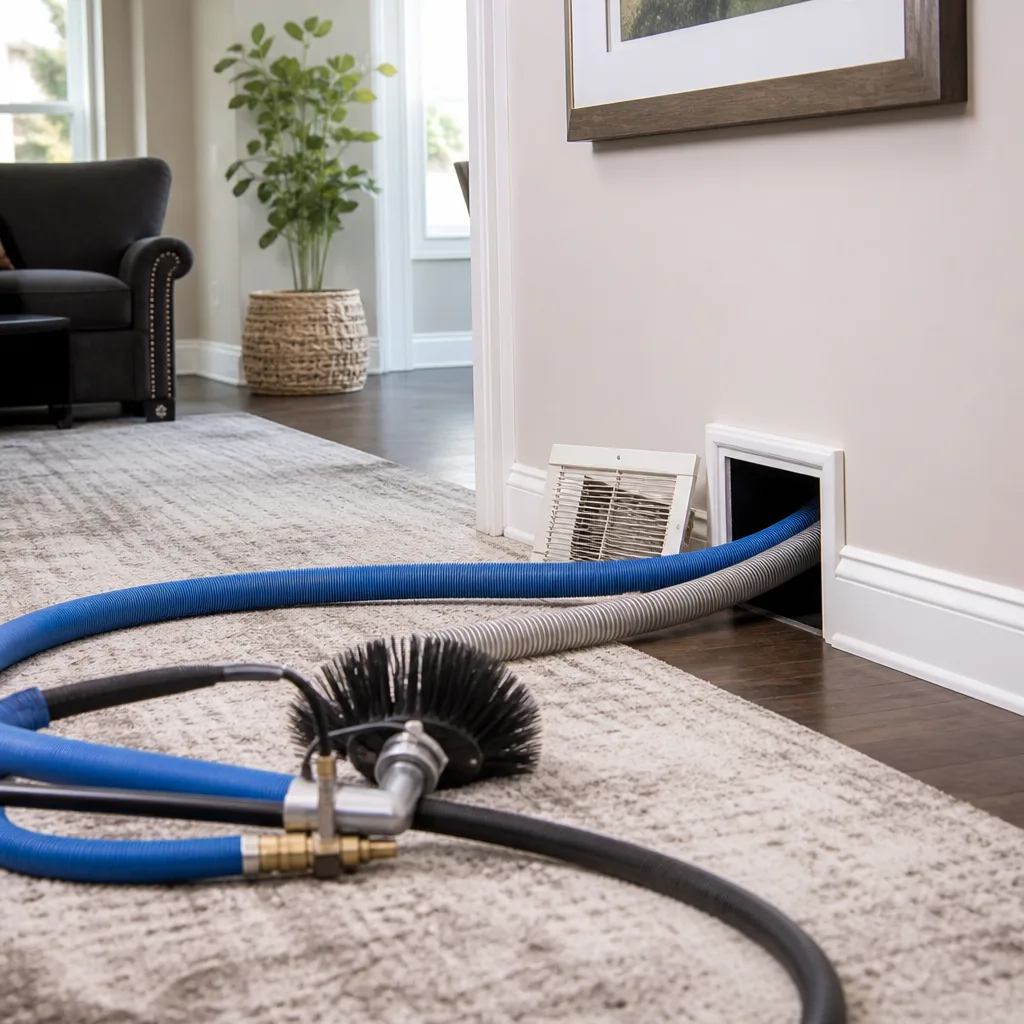
- Whole-home duct cleaning
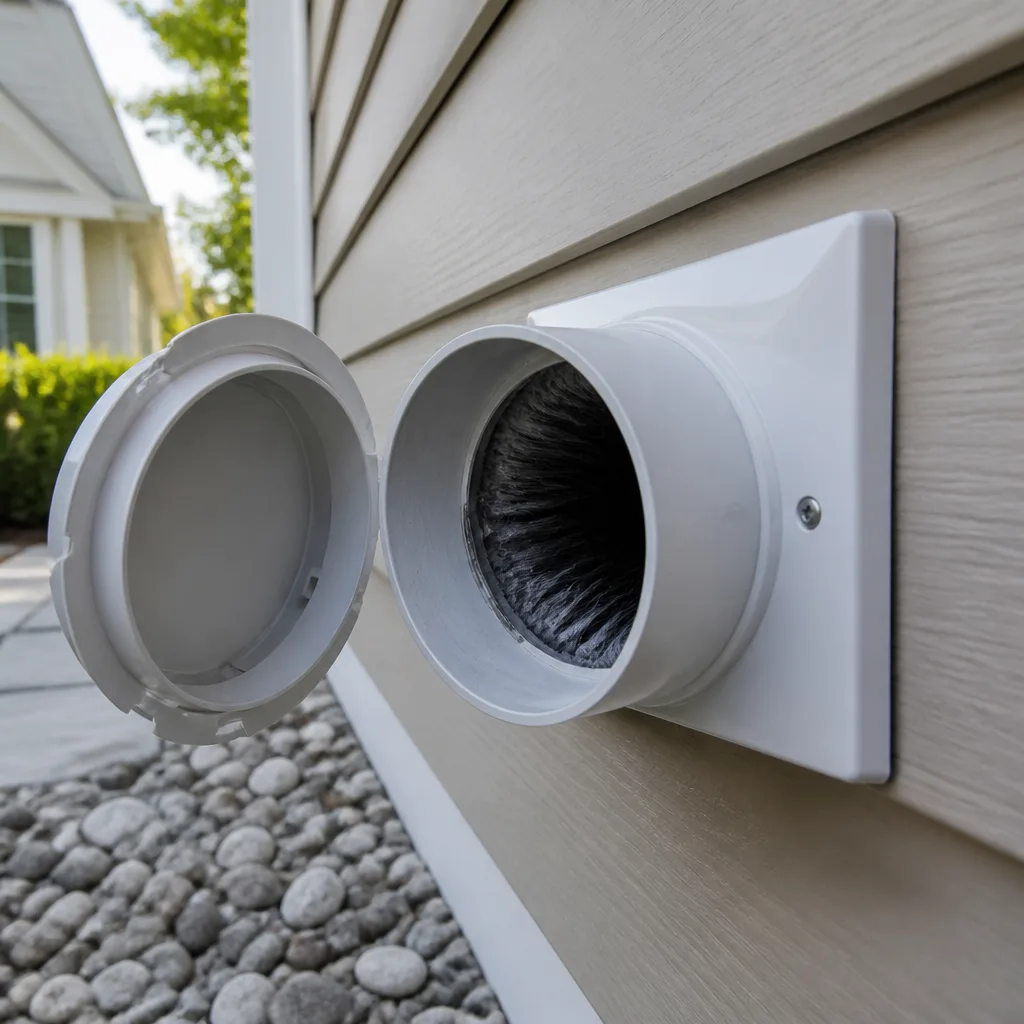
- Dryer vent cleaning
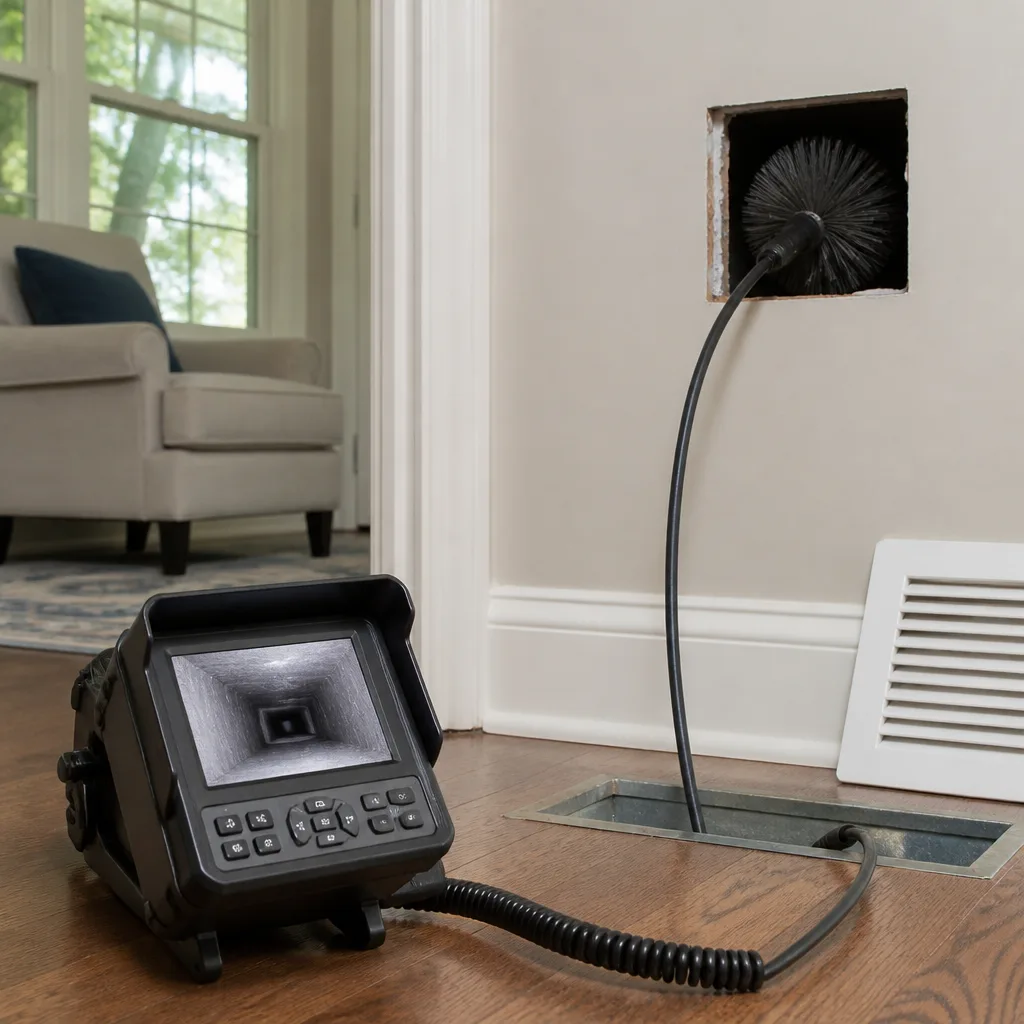
- Camera inspection
- Sanitizing & deodorizing
Table of Contents
- What actually drives duct cleaning cost in The Heights
- Why per-vent pricing is a red flag
- What Heights homes cost to clean, and why
- The line-item breakdown, explained
- Add-on services: legitimate costs and upsell patterns
- How to read a quote and spot real labor
- The equipment benchmark that explains the price gap
- Common mistakes to avoid
- When to call a professional
- Frequently asked questions
What Actually Drives Duct Cleaning Cost in The Heights
Cost tracks scope and equipment, not square footage. A 2,000-square-foot home with a tight, simple duct layout can take less real work than a 1,600-square-foot home with a two-story attic run, flex duct stapled into awkward corners, and no existing access panels. Here’s what moves the number:
- System size and configuration. One central air system versus two. Number of supply and return branches. Length of the longest run from the air handler. A sprawling ranch layout is easier to clean than a stacked two-story system where half the ductwork sits in an attic and half runs through chases.
- Duct material. Sheet metal is straightforward to brush and to seal. Flex duct requires lower-pressure rotary tools so the liner doesn’t tear, and it may need replacement rather than cleaning if it’s collapsed or water-stained. Rigid board and lined ductwork add time.
- Access point cutting. A properly cleaned system needs access at the plenum, at branch runs, and past the first turn. Homes without existing access panels need boots cut and capped – that’s labor and materials, and on a house with limited attic space above the living area it takes longer. Some operators skip access points entirely and clean only what they can reach from the registers. That’s the $149 quote.
- Negative-air equipment run time. Professional systems like Abatement Technologies containment units and HEPA filtration don’t just pull the cleaning debris out – they hold the space under negative pressure so nothing migrates into your living area while the work happens. The equipment has to run for the full duration of the cleaning, not a fifteen-minute pass.
- Sanitizing components. A sanitizing application (fogger or coil spray) is a separate material and labor item from mechanical cleaning. It’s meaningful when there’s biological growth or musty odor; it’s pointless if the system just needs debridement and sealing.
In our experience, the spread between a bare-minimum visit and a genuine whole-system cleaning in The Heights comes down to whether the operator is cleaning the air path or just the visible parts of it.
Why Per-Vent Pricing Is a Red Flag
Per-vent pricing is an accounting convenience for the seller, not a fair way to price a job. Here’s why: the number of vents has almost no relationship to how much work a system requires. A home with twenty-two small supply registers on short runs might take half the time of a home with sixteen registers on long, awkward branch lines through an attic. Billing by vent rewards the operator for counting registers and punishes the operator who prices on real labor.
Worse, per-vent pricing lets an operator quote an attractive per-vent rate over the phone and then substantially increase the total once they arrive and count what you didn’t know you had. If you’re comparing quotes and one party prices per vent, convert it before you compare:
- Ask how many vents are included in the quoted price, plus the per-vent rate beyond that number.
- Ask whether the quoted work includes the main trunk lines and the air handler area, or only branch runs off the registers.
- Ask whether access point cutting and capping is included or billed separately.
- Ask for a written, whole-system, all-in price for your specific address.
A legitimate operator in The Heights should be able to give you a whole-system price from a short conversation plus a look at the system – because the whole-system price is what they actually invoice. If the answer is “we’ll have to see when we get there,” you’re being quoted a prospect, not a price. When you’re ready to compare that number to a real one, our air duct cleaning page sets out exactly what a whole-system visit covers.
What Heights Homes Cost to Clean, and Why
The Heights has a housing mix that makes generic duct cleaning pricing especially misleading. The neighborhood includes a large stock of restored and new Craftsman-style homes, a good number of more recent two- and three-story rebuilds on narrower lots, and older bungalows with attic duct systems that were retrofitted at various points. Each of those presents a different cleaning job:
- Vintage bungalows with attic systems. Ductwork is often in the attic, sometimes flex, sometimes sheet metal with too few access points. Attic access is limited in these homes, and the work happens in a hot, tight space. This is often the highest-labor category per linear foot of duct.
- Two-story Craftsman rebuilds with two systems. Two air handlers, two sets of trunk lines, more registers, and often a second attic or a mechanical chase. Time roughly doubles. A two-system home priced at $1,200 isn’t high – it’s a two-system price.
- Newer builds with tight flex duct and few access panels. Flex duct installed during construction with minimal access means access point cutting is real work on the first visit. Once the panels are in place, subsequent cleanings are faster and cheaper.
- Older homes with ductwork in conditioned chases. Easier access in some ways, harder in others – chases limit maneuverability and often require flexible tooling rather than a straight brush run.
One climate note that matters for The Heights: our winters are mild, so the system rarely sits idle for a cold season the way it does further north. Homes here cycle the HVAC almost year-round, which means dust and debris accumulate continuously rather than seasonally. That’s a reason to clean on a genuine maintenance interval, not a reason to panic-clean.
The Line-Item Breakdown, Explained
Every legitimate duct cleaning quote has the same underlying cost components. Here’s what each one is actually paying for, so you can spot the difference between a real line item and a made-up charge.
- Mobilization and setup. Getting a properly equipped vehicle to your address, running hoses, establishing containment, and covering floors. This is real cost and it’s the same whether the job takes two hours or six. It’s part of the price, not a separate fee. If someone quotes you a “trip charge” on top of a written estimate, ask why the estimate doesn’t include the work.
- Mechanical cleaning labor. Rotary brush and air-whip time through the supply and return system. This is the biggest line item on a real quote and it’s the one that a teaser quote skips. If a quote doesn’t seem to contain meaningful labor time, it doesn’t contain meaningful cleaning.
- Negative-air equipment deployment. The containment unit running for the duration of the work. This is a capital cost and an operating cost per job. Operators who don’t own this equipment can’t run it, which is why their quotes are lower and the result is different.
- Access point cutting and capping. An item on a proper quote. If a quote doesn’t mention it, ask whether it’s included and how it’s priced.
- Debris disposal. The material pulled out of the system goes somewhere. Legitimate operators dispose of it properly.
- Post-cleaning inspection and photos. Before-and-after documentation of your own ductwork. This is your proof the work was actually done. Any operator who can’t or won’t produce it is asking you to take the invoice on faith.
Add to that list a structural inspection – checking duct runs for disconnect, crush, tears, and collapse. This is where cleaning stops being a standalone service and starts being an opportunity to correct real problems. We clean it, then we seal it, because a duct that’s clean today and leaking a quarter of its air into an attic tomorrow doesn’t do much for your indoor air or your energy bill. Duct repair and sealing in the same visit means one call covers the whole system rather than scheduling a second contractor.
Add-On Services: Legitimate Costs and Upsell Patterns
Some add-ons are genuine and worth the price. Others are upsell packaging. Here’s how to tell them apart.
Dryer vent cleaning
A legitimate add-on with a real safety rationale. Lint accumulation in a dryer exhaust run restricts airflow and creates a fire hazard. It’s priced per job as labor and equipment time, not as a per-foot rate. If your dryer seems slow to dry a load, the vent is the first thing to check. See our dryer vent cleaning page for what the job actually involves.
Coil and blower cleaning (HVAC cleaning)
Separate from duct cleaning and genuinely necessary when the evaporator coil or blower wheel is fouled. It’s a distinct labor task and legitimately priced as a separate line item. If a quote bundles “HVAC cleaning” with duct cleaning at an attractive figure, ask what specifically gets cleaned at the air handler – the answer will tell you whether it’s real. Our HVAC cleaning page covers that scope.
Sanitizing / UV and air-quality systems
Sanitizing with a fogger is a material cost plus labor, and it’s meaningful in systems with biological growth or persistent musty odor. Whole-home air-quality upgrades – filtration and humidity control – are a different category of spend and should be treated as a consultative recommendation, not a tack-on at the end of the invoice. When Aprilaire or Honeywell equipment is part of the conversation, it’s because the household needs a filtration or humidity solution beyond what cleaning can offer, and that recommendation should be explainable in plain terms.
Duct sealing and repair
Legitimate and priced as a distinct scope. Sealing isn’t an upsell bolted to the end of a cleaning – it’s the fix for disconnected joints, torn flex, and leaky plenums. If the technician inspecting your system finds a disconnected branch line, sealing it isn’t an add-on; it’s the reason cleaning wasn’t wasted money.
Upsell patterns to watch for
- An add-on pushed before the technician has inspected the system. Sanitizing has a real use; sanitizing every job regardless of findings is a pattern.
- Add-ons quoted as a package “today only.” There’s no legitimate reason a price expires at the end of a visit.
- “Air quality systems” mentioned with no model, no spec, and no explanation of what problem it solves. Aprilaire and Honeywell products are real and useful; the absence of a specific answer to “what problem does this solve” means the recommendation is not real.
How to Read a Quote and Spot Real Labor
A quote is only useful if it tells you what work will happen. Here’s a checklist for reading one:
- Is it whole-system or per-vent? Whole-system wins.
- Are access points included? If not, ask how many will be needed and what the additional cost is.
- Is negative-air equipment named? “We use a HEPA vacuum” is not the same as containment. A serious operator can tell you the equipment brand.
- Is there a post-cleaning inspection and photo documentation? Yes means you’ll have proof.
- Is the price written down before work starts? One flat price per system, agreed in advance.
- Does the estimate include the repair evaluation? If the operator won’t inspect the duct structure, they can’t tell you whether the ductwork is sound.
When we quote a system in The Heights, the number is for the work described in the estimate. If the inspection turns up a problem the quote couldn’t anticipate – a disconnected run, a crushed flex section – that’s a separate conversation with a separate written estimate before any additional work is done. That’s the point of the estimate: it commits both sides to a price.
The Equipment Benchmark That Explains the Price Gap
Here’s the sanity check most homeowners never run. A professional duct-cleaning service truck doesn’t cost $149 to operate for a day. The vehicle, insurance, fuel, the rotary machine (Rotobrush and Nikro systems are purpose-built professional equipment, not modified shop vacs), the containment unit, the HEPA filtration, the brushes and hoses and access-panel inventory – all of that is a real per-day cost to the operator. A $149 quote cannot cover it. If the price is that low, someone is either not deploying that equipment, not paying their technicians properly, or not doing the work you think you’re buying.
That doesn’t mean the highest quote is always right. A $1,800 quote for a single-system home with normal access is over-priced, no matter how impressive the equipment list. The realistic middle – and what we typically see for a single-system home in The Heights – sits between $350 and $700, with larger multi-system homes running higher. If a quote sits wildly outside that band in either direction, ask what specifically is different about your system that would justify it.
One more piece of the picture: containment matters not just for the cleaning but for your home. When we work inside a home, we protect floors and surfaces and treat the space with care – Guardsman product knowledge factors into surfaces and finishes as much as the ducts themselves. That level of care is part of what’s in a professional quote, and it’s invisible on the invoice line labeled “cleaning.”
Common Mistakes to Avoid
- Comparing quotes without comparing scope. Two numbers without two written scopes tell you nothing. Ask each operator to name what’s included: access points, negative air, inspection, photos, sealing.
- Buying a $99 or $149 whole-home price without asking what gets cleaned. In a Heights home with attic ductwork, that price isn’t a discounted professional cleaning – it’s a different service entirely. Ask what’s actually in the truck and how long they’ll be on site.
- Taking a per-vent quote as final. The final number depends on vent count, which you won’t have a clean count of until they’re on site. Ask for a whole-system written price instead.
- Skipping the inspection for a cheaper cleaning. If nobody looks at the duct structure, a torn flex run or disconnected branch goes unnoticed and the cleaning is wasted. Insist on the inspection.
- Sanitizing without a reason. Sanitizing a duct system with no biological growth and no musty odor is a materials cost with no clear benefit. Ask what the sanitizing is treating before it’s priced in.
- Believing a price that can be “confirmed” after the work starts. A price confirmed after the technician is in the attic is not a price – it’s a negotiation you didn’t get to have. Get it in writing before anything moves.
- Forgetting the dryer vent. It’s a separate system, it accumulates lint, and it’s a fire concern. Many homeowners pay for a duct cleaning and never think to ask about it.
When to Call a Professional
Call a professional if you’re seeing persistent dust on surfaces within days of cleaning, musty odor when the system runs, visible dust streaking at the registers, or floor registers that blow visibly dirty air. Rising energy bills with no other explanation are worth investigating for duct leaks. Anyone in the home with allergy or respiratory sensitivity who notices symptoms worsening when the HVAC is running should have the system inspected. Visible debris in a return register, a return grille that’s been sitting behind furniture for years, or a system that hasn’t been cleaned through several changes of occupants – all reasons to have someone look. Duct repair and sealing should be handled by a trained professional; do not attempt to cut access panels, work inside a duct yourself, or repair torn flex duct in an attic without proper containment, because the debris disturbed during a DIY attempt ends up in your living space, and working in tight attic spaces near HVAC equipment and electrical runs carries real risk. Air Duct Cleaning The Heights offers free estimates in The Heights. Call (855) 726-7524. We answer 24/7. Fast dispatch from 7am to 7pm, Sunday through Friday.
Frequently Asked Questions
Expect roughly $350 to $700 for a single-system home with normal access, and $700 to $1,200 for a two-story Craftsman layout with two systems or extensive attic ductwork. The estimate is per job and written before any work starts. Call (855) 726-7524 for an exact quote – estimates are free.
Because they’re for a different service. A $149 quote typically covers running a vacuum over registers without access point cutting, negative-air containment, or inspection. That’s a surface touch-up, not a system cleaning. Compare the included scope, not the headline number. Call (855) 726-7524 for a scoped estimate you can compare line for line.
You ask for before-and-after photo documentation of your own ductwork, taken during the visit. Any operator who can’t or won’t provide it is asking you to take the invoice on faith. Then inspect the system yourself: look at the access panels, ask what was found during the inspection, and ask for the written post-cleaning report. Call (855) 726-7524 for an estimate that includes photo documentation.
Most homes in The Heights do well on a cleaning every few years, sometimes longer, depending on system condition and the home’s dust load. Because the HVAC here cycles nearly year-round in our mild climate, debris accumulates continuously rather than in one season, so the right interval is set by inspection findings, not a fixed calendar. Call (855) 726-7524 and we’ll talk through what makes sense for your system.
Yes, usually, because two-story homes often have two HVAC systems, more registers, and additional attic duct runs. Two systems means roughly twice the labor. That’s the actual reason – not a markup for the address.
Only if the inspection finds it. Disconnected branch lines, torn flex, and leaking plenums waste conditioned air and pull attic dust into the system. If sealing is needed, it’s better done in the same visit – one call covers the whole system. Call (855) 726-7524 for an estimate that includes an inspection.
Ask whether the operator uses a rotary brush system (Rotobrush and Nikro are standard professional brands), and whether the job includes negative-air containment equipment. If the operator can name their equipment, that’s a good sign. If the answer is vague, the quote will be vague as well. For the broader picture of what a full-system cleaning includes, start with Air Duct Cleaning The Heights.
See the difference
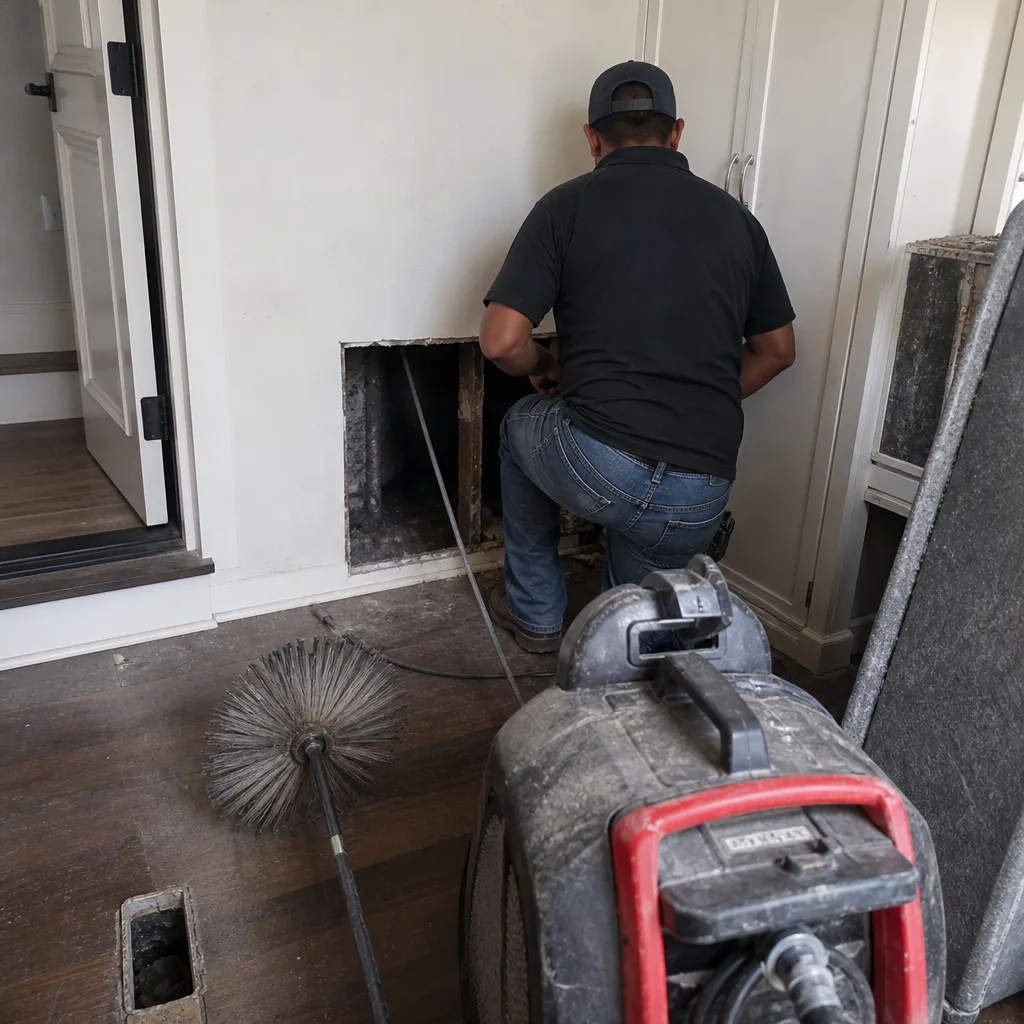 Before
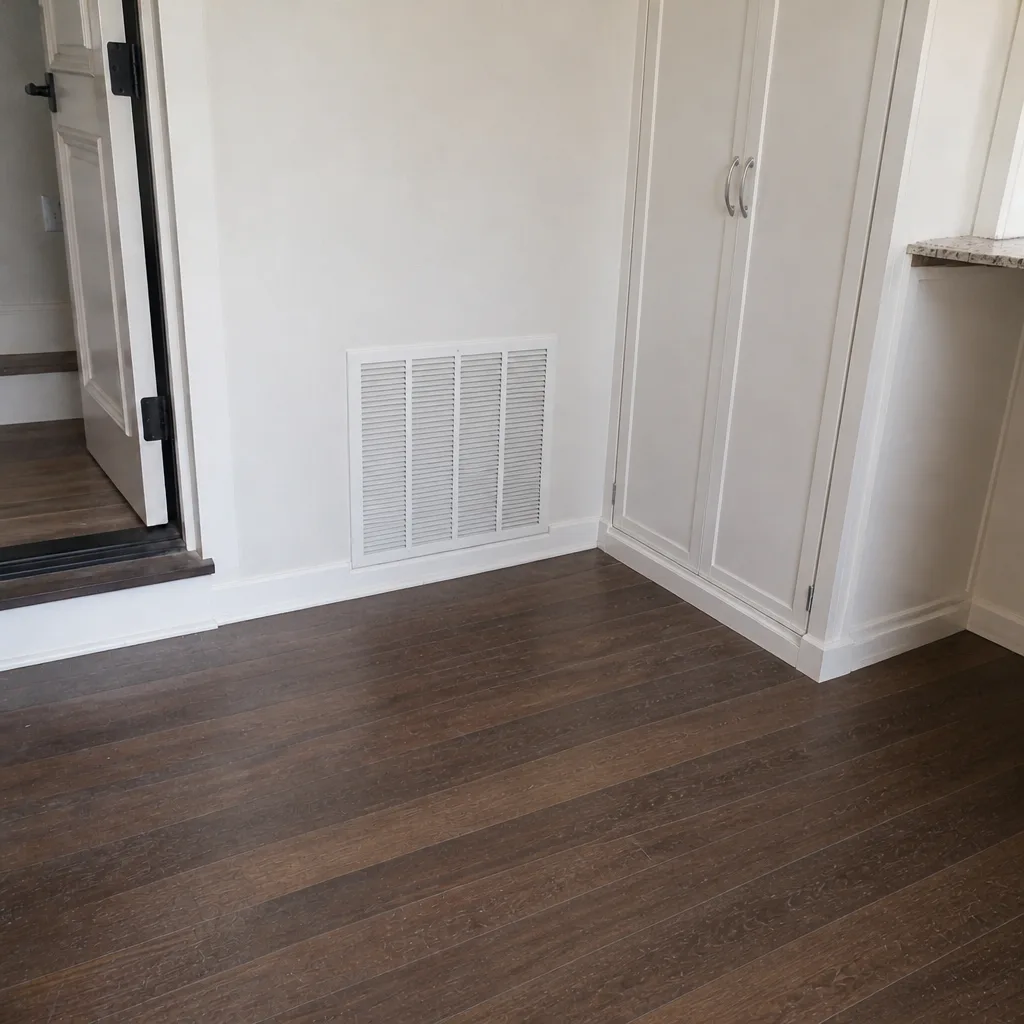 After
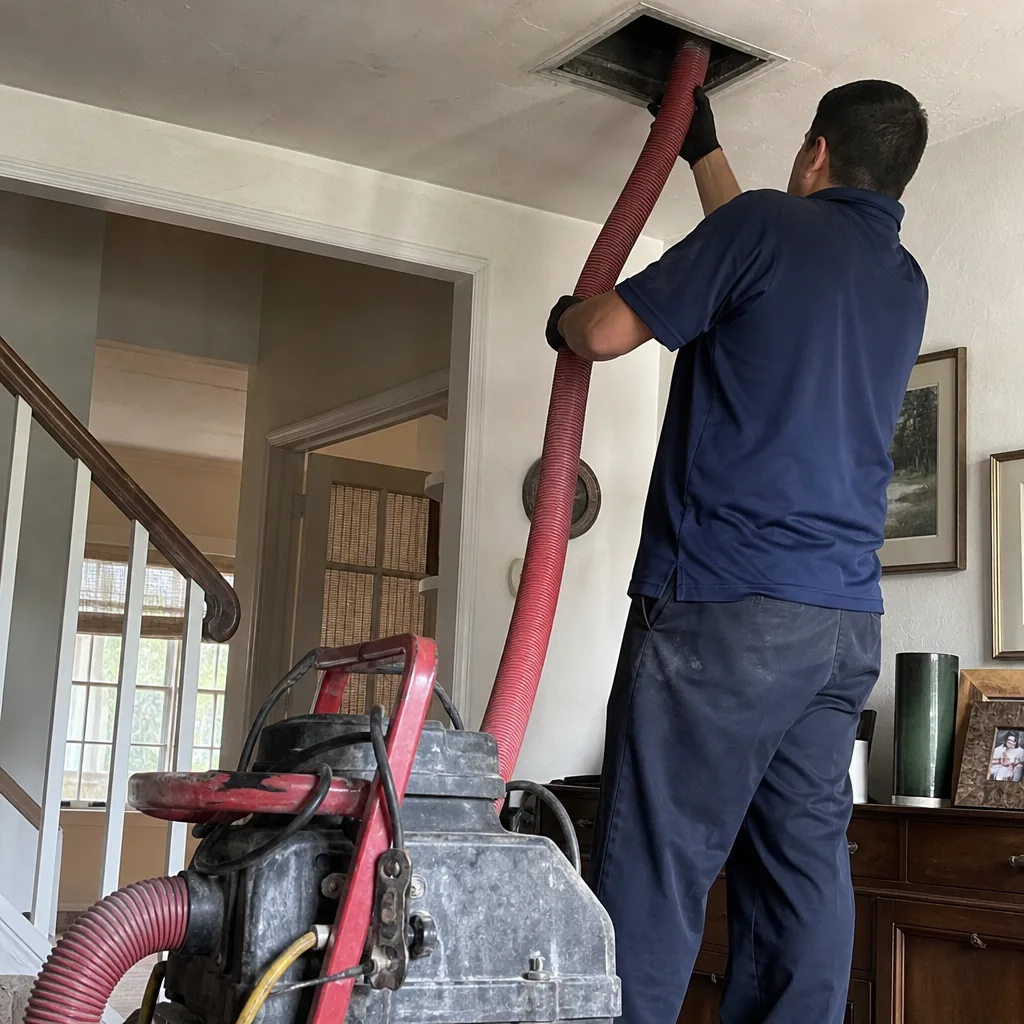 Before
 After
 Before
 After
The Bottom Line
Duct cleaning prices in The Heights vary widely for a simple reason: the services underneath the name vary widely. A legitimate whole-system quote prices the mobile setup, the mechanical cleaning labor, the negative-air equipment deployment, the access point cutting, and the inspection – and commits to it in writing. A teaser quote doesn’t. When you’re comparing, ask each operator the same questions about scope, equipment, and photo documentation, and compare the answers rather than the numbers. And if your ducts turn out to need repair, know that cleaning without sealing is half a job. Then be sure the service you buy is actually cleaning the system your household breathes through.
Contact Us for a Free Estimate
If you’ve read the breakdown and want a real number for your home, call us at (855) 726-7524. The estimate is free, the price is set per job in writing before any work starts, and you’ll know exactly what’s in scope and what isn’t. We answer 24/7, with fast dispatch from 7am to 7pm, Sunday through Friday. One flat price per system, agreed in advance, with before-and-after photos of your own ducts so you can see what changed. That’s how we do it in The Heights.
Written by the team at Air Duct Cleaning The Heights.